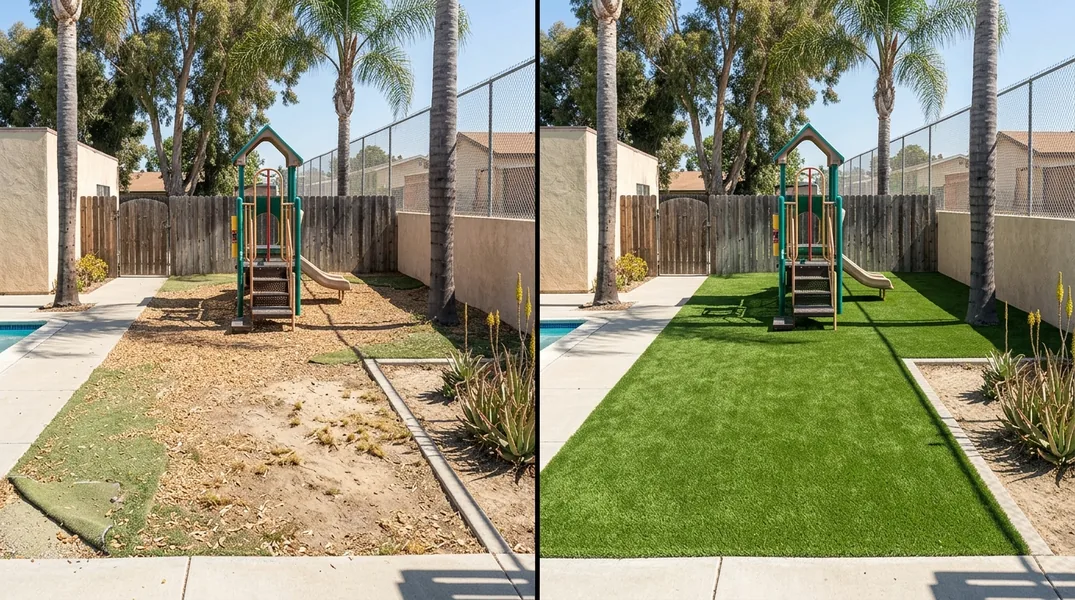
California Law and HOA Artificial Grass Restrictions
If you own a home in a homeowners association (HOA) community in San Diego, you may have wondered whether artificial grass is permitted on your property. The good news is that California law actually protects your right to install artificial turf in many situations, even if your HOA initially pushes back.
California Civil Code Section 4735, which took effect in 2015, explicitly prohibits HOAs from banning artificial grass on residential properties. This law was designed to encourage water conservation during California's ongoing drought challenges. However, the law does allow HOAs to establish reasonable restrictions regarding the type, quality, and appearance of artificial turf. This means your HOA cannot simply say 'no artificial grass,' but they can require that you use high-quality, aesthetically pleasing turf that meets specific standards. Understanding this distinction is crucial when planning your Residential Artificial Grass Installation project.
Many homeowners in San Diego are surprised to learn that their HOA's blanket prohibitions against artificial turf are actually unenforceable under state law. If your HOA has rejected your artificial grass request based on a simple 'no turf' rule, you may have legal grounds to challenge that decision. However, before escalating to a legal dispute, it's worth understanding what your HOA can legitimately require and how to navigate the approval process successfully.
What HOAs Can and Cannot Require for Artificial Turf
While California law prevents HOAs from outright banning artificial grass, these associations do retain the power to enforce reasonable aesthetic and quality standards. Your HOA can require that artificial turf meet certain specifications, such as minimum durability ratings, realistic appearance, appropriate pile height, and proper drainage systems. They may also specify that the turf must be installed in designated areas or that certain portions of your yard remain natural landscaping. These requirements exist to maintain neighborhood appearance and property values, which is a legitimate HOA concern.
What your HOA cannot do is impose restrictions that are so stringent they effectively prohibit artificial grass altogether. For example, requiring turf that no longer exists on the market, demanding installation costs that are economically unreasonable, or banning artificial grass from front yards while allowing it elsewhere would likely violate California law. The key test is whether the restriction is 'reasonable' and whether it serves a legitimate purpose beyond simply preventing residents from installing artificial turf. When you're planning your project, knowing these boundaries helps you prepare a stronger submittal package that addresses your HOA's legitimate concerns while asserting your legal rights.
Preparing Your HOA Submittal and Approval Package
The most effective way to get artificial grass approved by your HOA is to submit a comprehensive, professional package that demonstrates the quality and appropriateness of your proposed installation. Rather than viewing the HOA as an obstacle, approach them as stakeholders who want to protect neighborhood aesthetics. Start by gathering detailed product specifications for the artificial turf you plan to install, including manufacturer data sheets, durability certifications, and photographs of the turf installed in similar residential settings. Many HOAs will have specific requirements about pile height (typically 1.5 to 2 inches for residential applications), drainage capabilities, and UV resistance, so make sure your product documentation addresses these points.
Your submittal package should include a site plan showing exactly where the artificial turf will be installed, how much of your yard it will cover, and what landscaping will remain. Include high-quality photographs or renderings showing how the finished installation will look, ideally with before-and-after images of similar properties. Professional installation companies like San Diego Turf Installation can provide these materials as part of their service. Many HOAs also appreciate seeing references from neighbors who have already installed artificial turf, or examples from other similar communities that have approved the same product. The more professional and detailed your submission, the more seriously your HOA will take your request.
Don't overlook the importance of including maintenance and care documentation in your package. Address any concerns your HOA might have about odor, pest issues, or long-term durability by providing manufacturer warranties and maintenance guidelines. Some HOAs worry that artificial turf will look obviously fake or will deteriorate quickly, so demonstrating that modern turf products are durable, realistic, and backed by solid warranties can ease these concerns significantly.
Common HOA Objections and How to Address Them
HOAs typically raise several predictable concerns when homeowners propose artificial grass installations. The most common objection involves aesthetics: the HOA worries that artificial turf will look obviously fake and detract from neighborhood appearance. The reality is that modern artificial grass products are remarkably realistic, with natural color variations, appropriate texture, and authentic blade shapes that closely mimic real grass. By providing samples and high-quality photographs of the specific product you plan to install, you can directly address this concern. Inviting your HOA board members to visit a nearby property with the same turf installed can be even more persuasive than photographs.
Another frequent concern relates to drainage and potential water pooling or odor issues. This objection is actually easier to address than many homeowners expect. Quality artificial turf systems include proper drainage layers and perforated backing that allows water to flow through quickly. Providing technical specifications demonstrating that your chosen product meets or exceeds drainage standards can satisfy this requirement. Some HOAs also worry about pest infestations or the turf becoming a breeding ground for insects, but this is largely a myth when proper installation and maintenance practices are followed.
A third common objection involves the long-term durability and appearance of artificial grass. HOAs may be concerned that the turf will fade, develop bare spots, or require excessive maintenance. Modern commercial-grade artificial grass, when properly installed and maintained, can last 15 to 20 years or longer. Providing manufacturer warranties and information about routine maintenance (brushing, rinsing, and occasional infill replenishment) demonstrates that you're committed to keeping the installation in good condition. Being prepared to address these specific concerns, with data and examples, significantly increases your chances of approval.
Front Yard Artificial Grass and HOA Approval in San Diego
Front yard installations are often the most scrutinized by HOAs, since these areas are visible from the street and contribute to neighborhood curb appeal. Many HOAs have stricter standards for front yards than for backyards, and this is perfectly legal under California law. If your HOA is hesitant about front yard artificial grass, this is an opportunity to demonstrate that modern turf products look professional and enhance property appearance rather than diminish it. High-end artificial turf with realistic color variation and appropriate blade texture can actually look more manicured and attractive than patchy, drought-stressed natural grass.
When proposing front yard artificial grass, emphasize the water conservation benefits, which align with California's environmental goals and many HOAs' stated values. Provide before-and-after photographs showing how similar front yard installations improve curb appeal. If your neighborhood has drought-resistant native plants or hardscaping, position your artificial grass as part of a comprehensive water-wise landscaping strategy. Some HOAs may require that you maintain a certain percentage of your front yard as natural plantings or decorative elements, so be prepared to integrate artificial turf with other landscape features. This balanced approach often satisfies HOA concerns while still allowing you to install the turf you want.
Working with Professional Installers for HOA Approval
One of the smartest moves you can make when navigating HOA approval is to partner with an experienced Residential Artificial Grass Installation company that understands local HOA requirements. Professional installers like San Diego Turf Installation have worked with numerous HOAs throughout the region and understand what documentation and specifications different boards typically require. They can help you select turf products that are likely to gain approval, prepare professional submittal packages, and even attend HOA meetings if needed to present your proposal.
Professional installers also ensure that your installation meets or exceeds any standards your HOA specifies. When your HOA sees a written scope that names the turf product, the base depth and the infill, they're more likely to approve your request. Additionally, professional installers can provide warranties and maintenance support that give your HOA confidence in the long-term quality of your installation. If you're ready to move forward with your project, reach out to San Diego Turf Installation at (619) 831-6744 to discuss your specific HOA situation and get a free estimate for your installation.
Looking for a professional artificial grass installation company in San Diego? San Diego Turf Installation responds fast for all your artificial grass installation needs.
Get a Free Quote