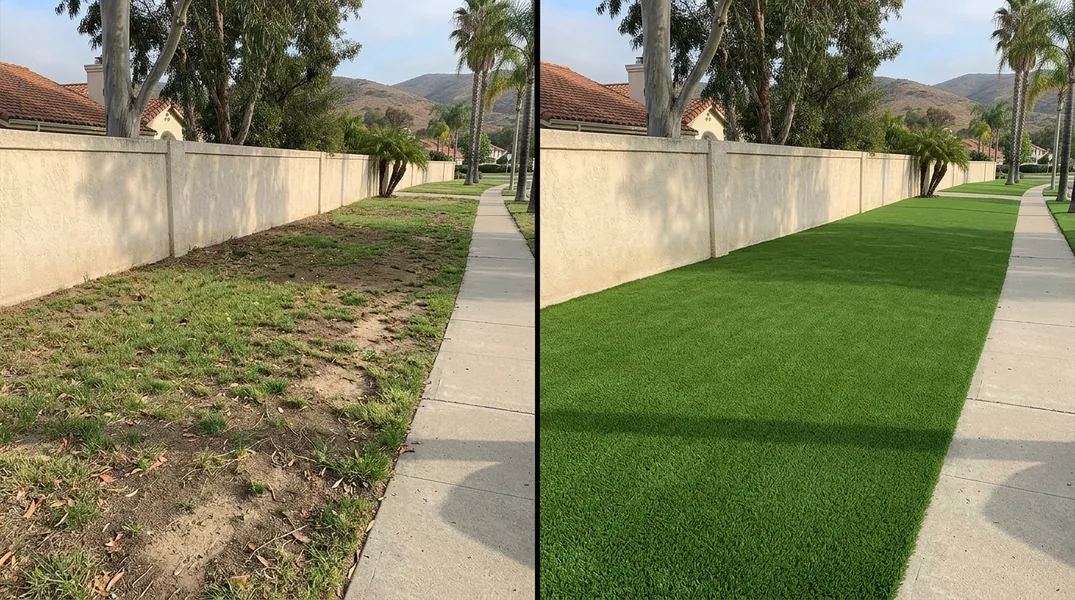
Why Slopes and Canyons Demand Special Attention for Artificial Grass
Homeowners across San Diego love the idea of artificial grass, but properties built on slopes or near canyon edges present unique challenges that flat yards simply don't face. Water drainage becomes critical, wind exposure increases significantly, and soil stability plays a much larger role in long-term turf performance. If you're considering Residential Artificial Grass Installation on a sloped lot, understanding these environmental factors before installation begins can save you thousands in repairs down the road.
The good news is that with proper planning and expert installation, artificial grass performs beautifully on slopes and canyon properties. The key lies in meticulous preparation of the base layer, strategic drainage solutions, and accounting for the wind patterns that are common in elevated San Diego locations. Many homeowners assume artificial grass is a simple install-and-forget solution, but terrain and climate demand respect. That's why working with experienced installers who understand local geology and weather patterns makes all the difference.
Understanding Artificial Grass Drainage on Sloped Terrain
San Diego's winter rains, though modest compared to other regions, still require careful management on slopes. Water flowing downhill can pool at the base of artificial grass installations if drainage pathways aren't engineered correctly. Poor artificial grass drainage leads to soggy turf, subsurface erosion, mud seepage, and accelerated wear on the backing. On sloped properties, gravity works against you, and water will always find the path of least resistance. If that path runs underneath your turf rather than away from it, you'll face problems within months.
The solution involves creating a sloped base that mirrors or slightly exceeds the natural grade of your yard, combined with perimeter drainage channels that redirect water safely away from the installation. Professional installers typically recommend a minimum slope of 1 to 2 percent for artificial grass areas, which is gentle enough to be invisible to the eye but steep enough to move water consistently. Subsurface drainage fabric and perforated drain pipes buried beneath the base layer work together to capture and channel water downslope or toward designated drainage areas. Without this layered approach, even premium artificial grass will deteriorate prematurely, and you'll regret skipping proper drainage planning.
What to Put Under Artificial Grass: Base Preparation Essentials
Choosing what to put under artificial grass is one of the most important decisions in any installation, and it becomes even more critical on slopes. The base layer serves as the foundation for everything above it, providing stability, drainage, and longevity. Most professional installers recommend starting with a compacted crushed stone or recycled asphalt base, typically 4 to 6 inches deep on level ground, but slopes may require deeper or more carefully engineered bases to prevent settling and shifting.
On sloped terrain, your contractor should first remove any loose topsoil and establish a stable subgrade, then apply a geotextile fabric to prevent soil migration and keep the base materials separated from native earth. Next comes the crushed stone base, compacted in layers to achieve proper density. For canyon properties or steeper slopes, some installations benefit from a second layer of finer stone or recycled asphalt, which provides a smoother, more stable surface for the artificial grass backing. The goal is a base that drains freely, resists settling, and remains stable even when water percolates through it during heavy rain events. Skimping on base preparation is the leading cause of artificial grass failure on slopes, so invest in quality materials and professional turf base prep from the start.
Artificial Grass Underlay and Padding on Slopes
Once your base is properly compacted and graded, the next critical layer is your artificial grass underlay. This foam or rubber padding sits directly beneath the turf and serves multiple purposes: it provides cushioning for foot traffic, improves drainage performance, and adds an extra thermal barrier. On slopes, the underlay also helps distribute weight more evenly across the base, reducing the risk of localized settling or shifting that could create divots or uneven surfaces over time.
Quality underlayment is especially important for canyon properties where temperature swings between sunny and shaded areas can be dramatic. A premium underlay with good drainage properties ensures that water moves through the system quickly, preventing saturation that could cause the turf to separate from its backing or develop mold. There are several underlay options available, ranging from basic closed-cell foam to advanced recycled rubber products with superior drainage ratings. Your installer should recommend an underlay specifically rated for sloped installations and local climate conditions. Cheaper underlayment may save money upfront, but it often fails prematurely on challenging terrain, making premium options a worthwhile investment for slopes and canyon yards.
Wind Management and Turf Anchoring on Canyon Properties
Canyon and elevated properties in San Diego often experience stronger, more consistent wind than lower-elevation neighborhoods. Wind creates stress on artificial grass in ways that many homeowners don't anticipate. Constant wind can cause the turf backing to flex and shift, accelerating wear at seams and edges. In extreme cases, high winds can actually lift or ripple the turf surface, especially if the installation wasn't secured properly during the initial installation.
Professional installers secure artificial grass on slopes and canyon properties using a combination of adhesives, landscape nails, and perimeter anchoring systems. The edges and seams receive extra attention, with adhesive applied to prevent lifting and separation. Some installations on particularly windy sites benefit from additional anchoring every 12 to 18 inches along the perimeter, rather than the standard spacing used on protected yards. Your contractor should also evaluate wind patterns on your specific property and adjust anchoring strategy accordingly. If you're planning an installation on a canyon lot or elevated slope, discuss wind exposure with your installer and ensure they have experience with high-wind sites. Proper anchoring adds minimal cost but dramatically extends the life of your turf in challenging environments.
Professional Installation for Slopes and Canyons Near Me
While some homeowners attempt DIY artificial grass installation on flat yards, slopes and canyons absolutely require professional expertise. The engineering involved in drainage design, base preparation, and wind management goes well beyond typical homeowner capability. A poorly executed installation on a slope can fail within a year, costing you far more than professional installation would have cost initially. San Diego Turf Installation has years of experience working with the unique terrain and climate challenges of slope and canyon properties throughout the region.
When you're ready to explore artificial grass options for your sloped or canyon yard, reach out for a free estimate. Our team will assess your specific site conditions, evaluate drainage patterns, and design a solution tailored to your property's unique challenges. We'll explain the base preparation, underlay options, and anchoring strategy specific to your yard's slope and exposure. Call San Diego Turf Installation at (619) 831-6744 to schedule a consultation, or visit our website to request an estimate. With proper installation, your artificial grass will look beautiful and perform reliably for years to come, even on the most challenging San Diego terrain.
Looking for a professional artificial grass installation company in San Diego? San Diego Turf Installation responds fast for all your artificial grass installation needs.
Get a Free Quote